
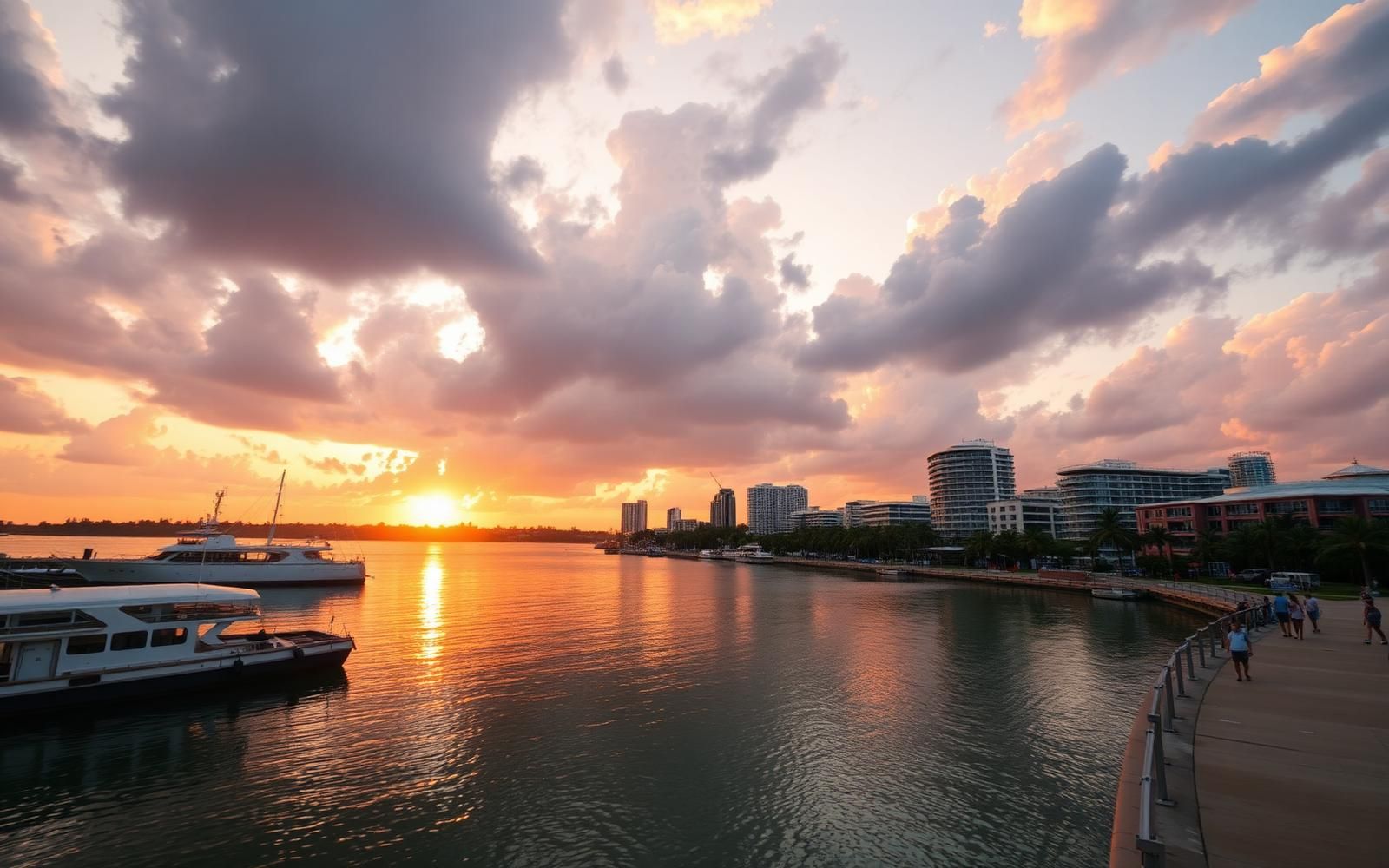
Darwin Waterfront precinct and harbour at sunset with hotels along the shoreline

Accommodation

Where to stay in Darwin

The city is small enough that no choice is wrong. It is still worth matching the area to the trip you are actually taking.

By area

Six places to base yourself

Best for families and first-timers

Darwin Waterfront

Safe lagoon swimming, restaurants on the doorstep, and a footbridge into the CBD. The easiest choice if you are not driving much.

Best for walkers and short stays

CBD and Esplanade

Hotels, apartments and hostels within reach of the mall, the tunnels, the harbour and the market shuttles.

Best for cruises and quiet evenings

Cullen Bay

Marina apartments beside the Tiwi ferry and dinner cruise departures, with a calmer feel.

Best for repeat visitors

Fannie Bay and Parap

Leafy, residential, near the museum and Saturday market, with more self-contained rentals.

Best for longer stays

Nightcliff and northern suburbs

Local rhythm, foreshore paths, Sunday markets and better value for a week or more.

Best for road trips

Caravan parks and camping

Palmerston, Berry Springs, Howard Springs and Litchfield-adjacent parks for vans and camper trailers. Book Dry season sites early.

What to check before booking

  • Air conditioning in bedrooms, not just the living area. This is not negotiable in October
  • Whether there is a pool, and whether it is shaded for any part of the day
  • Parking, particularly in the CBD where it is often paid and separate
  • Distance to a supermarket if you are self-catering for more than two nights
  • Dry season minimum-night rules and event weekends, which tighten availability

One more scheduling note. If you are heading to Kakadu, staying inside the park at Jabiru or Cooinda beats driving back to Darwin, because the good light happens at both ends of the day.

Which area is best for a first visit?
The Waterfront or the CBD. Both put the harbour, restaurants and the main attractions within walking distance.
When should I book?
For Dry season travel, several months ahead. Wet season bookings can often be made a week or two out at lower rates.
Is camping practical in the Wet?
Less so. Storms, humidity and closures make it hard work, and many park campgrounds close entirely.